Suppose that the supply and demand for wheat flour are balanced at the current price, and that the government then fixes a lower maximum price. 06.01.2018 · effect of price ceiling. The first rule of economics is you do not get something for nothing—everything has an opportunity cost. 18.05.2021 · a price ceiling is a maximum amount, mandated by law, that a seller can charge for a product or service. It's generally applied to consumer staples.

This price must lie below the equilibrium price in order for …
It's generally applied to consumer staples. Economics · microeconomics · consumer and producer surplus, market interventions, and international trade · market interventions and deadweight loss price ceilings and price floors how does quantity demanded react to artificial constraints on price? In order for a price ceiling to be effective, it must be set below the natural market equilibrium. A price floor is the lowest legal price a commodity can be sold at. Price floors are also used often in agriculture to try to protect farmers. When a price ceiling is set, a shortage occurs. Imagine a balloon floating in your house, the balloon cannot go higher than the ceiling. The same concept holds with prices and a price ceiling. Price ceiling has been found to be of great importance in the house rent. A price ceiling keeps a price from rising above a certain level (the "ceiling"),. More specifically, a price ceiling (in other words, a maximum price) is put into effect when the government believes the price is too high and sets a maximum price that producers can charge; Where this gets tricky is that a binding price ceiling occurs below the equilibrium price. Price floors are used by the government to prevent prices from being too low.
18.05.2021 · a price ceiling is a maximum amount, mandated by law, that a seller can charge for a product or service. Price ceiling is practiced in an attempt to help consumers in purchasing necessary commodities which government believes to have become unattainable for consumers due to high price. More specifically, a price ceiling (in other words, a maximum price) is put into effect when the government believes the price is too high and sets a maximum price that producers can charge; When a price ceiling is set, a shortage occurs. The first rule of economics is you do not get something for nothing—everything has an opportunity cost.
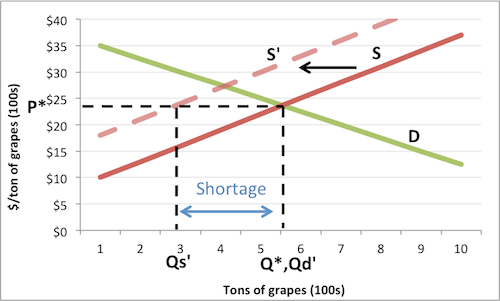
Price ceiling is a situation when the price charged is more than or less than the equilibrium price determined by market forces of demand and supply.
Price floors are used by the government to prevent prices from being too low. Suppose that the supply and demand for wheat flour are balanced at the current price, and that the government then fixes a lower maximum price. 18.05.2021 · a price ceiling is a maximum amount, mandated by law, that a seller can charge for a product or service. Price floors are also used often in agriculture to try to protect farmers. For the price that the ceiling is set at, there is more demand than there is. Price ceiling is a situation when the price charged is more than or less than the equilibrium price determined by market forces of demand and supply. A price ceiling means that the price of a good or service cannot go higher than the regulated ceiling. When a price ceiling is set, a shortage occurs. Price ceiling has been found to be of great importance in the house rent. Price ceilings have been proposed for other products. Price ceiling is practiced in an attempt to help consumers in purchasing necessary commodities which government believes to have become unattainable for consumers due to high price. Price ceilings, which prevent prices from exceeding a certain maximum, cause shortages. The price cannot go higher than the price ceiling.
A price ceiling keeps a price from rising above a certain level (the "ceiling"),. Price floors are also used often in agriculture to try to protect farmers. Price ceiling is a situation when the price charged is more than or less than the equilibrium price determined by market forces of demand and supply. Price ceilings have been proposed for other products. The first rule of economics is you do not get something for nothing—everything has an opportunity cost.
For the price that the ceiling is set at, there is more demand than there is.
When a price ceiling is set, a shortage occurs. Price floors are used by the government to prevent prices from being too low. So if renters get "cheaper" housing than the market requires, they tend to also end up with lower quality housing. Economics · microeconomics · consumer and producer surplus, market interventions, and international trade · market interventions and deadweight loss price ceilings and price floors how does quantity demanded react to artificial constraints on price? Price ceiling is a situation when the price charged is more than or less than the equilibrium price determined by market forces of demand and supply. Price ceilings have been proposed for other products. A price ceiling keeps a price from rising above a certain level (the "ceiling"),. Price floors, which prohibit prices below a certain minimum, cause surpluses, at least for a time. The first rule of economics is you do not get something for nothing—everything has an opportunity cost. It has been found that higher price ceilings are ineffective. The price cannot go higher than the price ceiling. Price ceilings, which prevent prices from exceeding a certain maximum, cause shortages. Imagine a balloon floating in your house, the balloon cannot go higher than the ceiling.
24+ Fresh Economics Price Ceiling - Barriers to Trade and the Underground Economy - A price ceiling means that the price of a good or service cannot go higher than the regulated ceiling.. Where this gets tricky is that a binding price ceiling occurs below the equilibrium price. Price floors are also used often in agriculture to try to protect farmers. In order for a price ceiling to be effective, it must be set below the natural market equilibrium. A price ceiling keeps a price from rising above a certain level (the "ceiling"),. A price ceiling means that the price of a good or service cannot go higher than the regulated ceiling.
